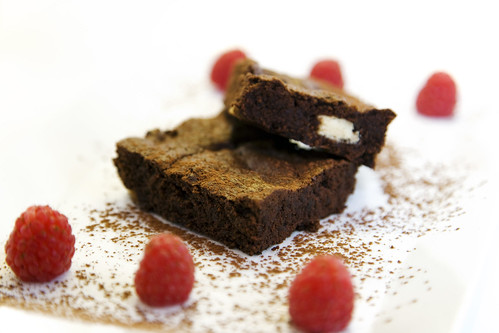
 Look good? Forget it, there's way too much sugar. (Photo by .craig)
You may have thought of chocolate as a guilty pleasure, but the ancient Maya considered it the food of gods.
Granted, the Maya also thought cutting out someone's heart in a ritual ceremony was a good fun, but they did get one thing right: chocolate really is a health food. That is, as long as you buy the dark kind. In fact, the darker the chocolate the healthier it is. As good as that sugar-laden milk chocolate bar may taste, it wouldn't have made its way into any self-respecting Maya feast.
If you don't believe me, read further for three good reasons to choose dark chocolate instead of milk chocolate.
1. Dark chocolate is better for weight loss.
Even though the amount of calories in milk chocolate and dark chocolate are pretty similar (and in fact milk chocolate sometimes contains fewer calories), dark chocolate contains significantly less carbohydrates. Milk chocolate usually has about 50 grams of carbs per 100 g, while the amount of carbs in dark chocolate ranges from 8 to 35 carbs, depending on how dark it is. A chocolate with 70% cocoa has ~30 grams; a 85% chocolate has ~20 grams.
If weight loss or maintenance is your goal, the combination of large amounts of carbohydrates and fat is something to avoid. A high carbohydrate load will increase insulin secretion, which is a signal for the body to store energy as fat. The reason why low-carb diets are so effective for weight loss is their effect on insulin: even if you eat lots of fat, if there are no carbs present to drive insulin up, the energy from dietary fat won't be stored into fat cells.
Unless you consume only a small quantity or restrict other carb sources to a minimum, combining milk chocolate with a low-carb diet is going to be difficult. If your goal is to stay under 50 grams per day, 100 grams of milk chocolate fills up your entire quota. But 100 grams of 85% dark chocolate still leaves you with 30 grams to spend on other carb sources, making dark chocolate a viable option even for low-carb dieters.
2. Dark chocolate causes less aging.
Okay, so perhaps a bit of an exaggeration there, since we don't know exactly how big a role advanced glycation end-products play in the aging process. We do know, however, that the accumulation of AGEs is one of the seven biomarkers of aging, which makes avoiding them a sensible goal.
As it happens, weight gain is not the only problem with the carbs in milk chocolate. Almost all of the carbohydrate in chocolate is sucrose, which is half glucose and half fructose. Even though the word 'glycation' in 'AGE' implies that glucose is the culprit, the fact is that fructose is much more prone to cause AGEs in the body. Since the main ingredient in milk chocolate is sugar, a 100 grams of milk chocolate will also give you a hefty dose of fructose.
Dark chocolate, on the other hand, is mostly composed of fat – cocoa butter, to be specific. The fatty acid composition is 61% saturated fat, 36% monounsaturated and only 3% polyunsaturated fat, making cocoa butter very resistant to oxidation. And if you're worried about cholesterol, here's something to ease your mind: almost all of the saturated fat in cocoa butter is cholesterol-neutral stearic acid. Fructose, however, may increase triglycerides levels.
Unlike dark chocolate, milk chocolate also contains some lactose. In addition to making milk chocolate an impossible treat for some lactose intolerants, lactose also causes glycation. Lactose breaks down to glucose and galactose, and like fructose, galactose appears to form AGEs more rapidly than glucose.
3. Dark chocolate has more cocoa polyphenols.
The health benefits of chocolate are almost entirely due to the polyphenols found in cocoa. As a rule of thumb, whenever you read something good about chocolate, what they're really talking about is cocoa. Therefore, as the cocoa content of chocolate increases, so do its positive effects on health. A standard milk chocolate will contain about 30% cocoa, while premium dark chocolates usually have more than 70%.
Another thing that reduces the polyphenol content of chocolate (by 60-90%) is alkalization (link), also known as Dutch processing or simply Dutching. Alkalization was invented in the 19th century to get rid of some of the bitterness of cocoa powder and to make it more palatable. Non-alkalized cocoa powder is a more light brown in color and tastes less sweet than alkalized cocoa powder.
Nowadays Dutch processing is very common among industrial chocolate makers (link), which suggests that there's a good chance the average high-sugar milk chocolate will contain alkalized cocoa. Many dark chocolates seem to use non-alkalized cocoa, however, probably because the bitterness is perceived as preferable among chocolate enthusiasts.
4. The cocoa polyphenols in dark chocolate are more bioavailable.
Even if your dark chocolate happens to be made from alkalized cocoa, you'll still get more bang for your buck in terms of polyphenols, because the polyphenols will be more bioavailable. This is again related to differences in the macronutrient composition of chocolates.
First, the bioavailability of cocoa polyphenols depends partly on the fat content of chocolate. One in vitro study showed that cocoa liquor (which is about 50% fat) retained more polyphenols than cocoa powder (about 15% fat) when submitted to a digestion model (link). The reason appears to be that the higher fat content increases the stability of cocoa polyphenols during digestion. Second, sucrose and milk protein may affect the absorption of polyphenols negatively (link).
Dark chocolate contains no milk protein, less sucrose and much more cocoa liquor than milk chocolate. The actual content varies, since different countries have different regulations on what kind of chocolates can be called "dark chocolate". The FDA, for example, states that dark chocolate must contain at least 35% chocolate liquor, while milk chocolate only needs to have more than 10%.
Also, chocolates with 40-70% cocoa are also sometimes sold as "dark chocolate", so be sure to check the ingredient list before purchase. The words "cocoa mass", "cocoa liquor", "cocoa powder", "cocoa paste", "cocoa solids", or something to that effect should be first on the list – if "sugar" is mentioned first, it's definitely not real dark chocolate.
5. Dark chocolate is more filling.
Anyone who has tried both milk chocolate and dark chocolate must have noticed that it takes much less to satisfy chocolate cravings with the latter than the former. I can personally eat 200 grams of milk chocolate (more than 1,000 kcal) in one go without having my craving satisfied. With 99% dark chocolate, a few pieces is enough. A similar effect was shown in a study from last year (link).
This, as mentioned before, is not related to energy content, because milk chocolate and dark chocolate have virtually the same amount of calories. Rather, the reason why a smaller quantity of dark chocolate is enough is probably a combination of less sugar and more nutrients. Humans generally have a preference for sweet foods, which is why we love candy when we're kids. But part of the reason why we can't stop eating candy until we feel sick is that there are no nutrients in candy, only calories. This lack of nutrients causes our body to send the satiety signal way too late.
Since dark chocolate is higher in cocoa powder, it's also higher in many nutrients, such as iron, magnesium, phosphorus, copper and manganese. Combined with the lower amount of sugar and high amount of fat, it's no surprise you get your daily chocolate fix quicker with dark chocolate than milk chocolate.
Summary
Dark chocolate contains less sugar, more cholesterol-neutral fat, and more cocoa polyphenols in a more bioavailable form than milk chocolate. Dark chocolate is also more filling, which means it takes less calories to satisfy your chocolate cravings.
Keep in mind, however, that excess consumption of dark chocolate has its downsides too. Cocoa powder is high in iron and oxalates, which are harmful in high quantities. We'll return to the subject of optimal intakes in future posts, but for now, I limit mine to 50-100 grams of chocolate per day.
For more information on chocolate, sugar, fat, and health, see these posts:
Tea, Coffee and Cocoa: All Good for Your Teeth
SAs, MUFAs vs. PUFAs: Fat Storage Depends on Type of Fatty Acid in Rabbits
Fats and AGEs: PUFAs Are Even Worse than Fructose
Low-Carb vs. Low-Fat: Effects on Weight Loss and Cholesterol in Overweight Men
Read More......
 Avocado oil has the highest smoking point. (Photo by Muffet)
 The table above shows the relative percentages of saturated (SA), monounsaturated (MUFA) and polyunsaturated fatty acids (PUFA) in various cooking oils and fats (data from US and Finnish food databases). They are in a decreasing order of PUFA content, meaning that the oils moist suitable for cooking are on the left and the least suitable oils are on the right.
Coconut oil has the highest SA content and the lowest PUFA content of all oils, making it very resistant to oxidation. Ghee and butter also have very little PUFA and lots of saturated fat. Based on this, butter is actually one of the best choices for cooking, although the high AGE content of butter and its tendency to brown quickly suggest to me that perhaps ghee is a better option. The reason might be that butter also contains some protein and a small amount of carbohydrate.
Palm oil and lard are somewhat lower in saturated fat than the first three, but since their MUFA content is quite high, they still make good choices for cooking. The rest to the right of these five are less than optimal. Corn oil, sesame oil, rapeseed oil, peanut oil, and canola oil are all high in polyunsaturates, making them prone to lipid peroxidation. And unless you buy them cold-pressed, they will have been heated during refining anyway, so some oxidation has probably happened before you even use them.
What about olive oil then? Even though everyone seems to love olive oil in general, there's something of a debate going on over whether it should be used for cooking purposes. My opinion is that, like the graph suggests, it's not the worst choice but it's not the best either. The smoking point of extra virgin olive oil seems to vary from 160 to 190 °C, depending on the free fatty acid content. Virgin olive oil, however, has some properties that make it more heat-tolerant than most other oils (link).
In general, the less refined the oil, the lower the smoke point. Unrefined oils high in PUFAs have the lowest smoking points (link), but high saturated fatty acid content does not necessarily guarantee a high smoking point. Coconut oil, for example, has a fairly low smoking point (177 °C, about the same as butter and lard) compared to peanut oil (227 °C). Refined avocado oil, which is mostly monounsaturated fat, appears to have one of the highest smoking points at 255-270 °C (link). Ghee is another oil with a very high smoking point (252 °C).
So which oils should you use for cooking? For sautéing and cooking at light to medium temperatures, my choice would be the ones on the left of the graph: coconut oil, ghee, butter, palm oil, and lard. If you stay below 170 °C, you're in pretty safe waters in terms of oxidation regardless of which one of them you choose. Virgin olive oil seems like a viable choice, too; just make sure the particular olive oil you're using it doesn't start smoking.
For searing, browning and other methods of cooking requiring higher temperatures, ghee and avocado oil seem like the best choices. When it comes to resistance to oxidation, ghee might take the cake, but avocado oil appears to have the highest smoking point of all oils, even though it does have 13.5% PUFAs. Still, keep in mind that when cooking at very high temperatures, some advanced glycation end-products (AGEs) are bound to be generated.
For more information on fats and health, see these posts:
Coconut Lowers LDL, VLDL and Triglycerides, Raises HDL
My Current Health Regimen
Blood Test Analysis: The Cholesterol and Saturated Fat Issue Revisited
Should Saturated Fat Be Avoided in Low-Carb Diets?
Read More......
The table above shows the relative percentages of saturated (SA), monounsaturated (MUFA) and polyunsaturated fatty acids (PUFA) in various cooking oils and fats (data from US and Finnish food databases). They are in a decreasing order of PUFA content, meaning that the oils moist suitable for cooking are on the left and the least suitable oils are on the right.
Coconut oil has the highest SA content and the lowest PUFA content of all oils, making it very resistant to oxidation. Ghee and butter also have very little PUFA and lots of saturated fat. Based on this, butter is actually one of the best choices for cooking, although the high AGE content of butter and its tendency to brown quickly suggest to me that perhaps ghee is a better option. The reason might be that butter also contains some protein and a small amount of carbohydrate.
Palm oil and lard are somewhat lower in saturated fat than the first three, but since their MUFA content is quite high, they still make good choices for cooking. The rest to the right of these five are less than optimal. Corn oil, sesame oil, rapeseed oil, peanut oil, and canola oil are all high in polyunsaturates, making them prone to lipid peroxidation. And unless you buy them cold-pressed, they will have been heated during refining anyway, so some oxidation has probably happened before you even use them.
What about olive oil then? Even though everyone seems to love olive oil in general, there's something of a debate going on over whether it should be used for cooking purposes. My opinion is that, like the graph suggests, it's not the worst choice but it's not the best either. The smoking point of extra virgin olive oil seems to vary from 160 to 190 °C, depending on the free fatty acid content. Virgin olive oil, however, has some properties that make it more heat-tolerant than most other oils (link).
In general, the less refined the oil, the lower the smoke point. Unrefined oils high in PUFAs have the lowest smoking points (link), but high saturated fatty acid content does not necessarily guarantee a high smoking point. Coconut oil, for example, has a fairly low smoking point (177 °C, about the same as butter and lard) compared to peanut oil (227 °C). Refined avocado oil, which is mostly monounsaturated fat, appears to have one of the highest smoking points at 255-270 °C (link). Ghee is another oil with a very high smoking point (252 °C).
So which oils should you use for cooking? For sautéing and cooking at light to medium temperatures, my choice would be the ones on the left of the graph: coconut oil, ghee, butter, palm oil, and lard. If you stay below 170 °C, you're in pretty safe waters in terms of oxidation regardless of which one of them you choose. Virgin olive oil seems like a viable choice, too; just make sure the particular olive oil you're using it doesn't start smoking.
For searing, browning and other methods of cooking requiring higher temperatures, ghee and avocado oil seem like the best choices. When it comes to resistance to oxidation, ghee might take the cake, but avocado oil appears to have the highest smoking point of all oils, even though it does have 13.5% PUFAs. Still, keep in mind that when cooking at very high temperatures, some advanced glycation end-products (AGEs) are bound to be generated.
For more information on fats and health, see these posts:
Coconut Lowers LDL, VLDL and Triglycerides, Raises HDL
My Current Health Regimen
Blood Test Analysis: The Cholesterol and Saturated Fat Issue Revisited
Should Saturated Fat Be Avoided in Low-Carb Diets?
Read More......